Notice: Articles before August 2021 may be missing images and links will not work, we're sorry for this inconvenience which is a result of a change of webhost after Adobe Business Catalyst terminated their company.
Heavy monsoon rains have devastated the Christian village of Ali Ahmad Khan Mari in Sindh, Pakistan.
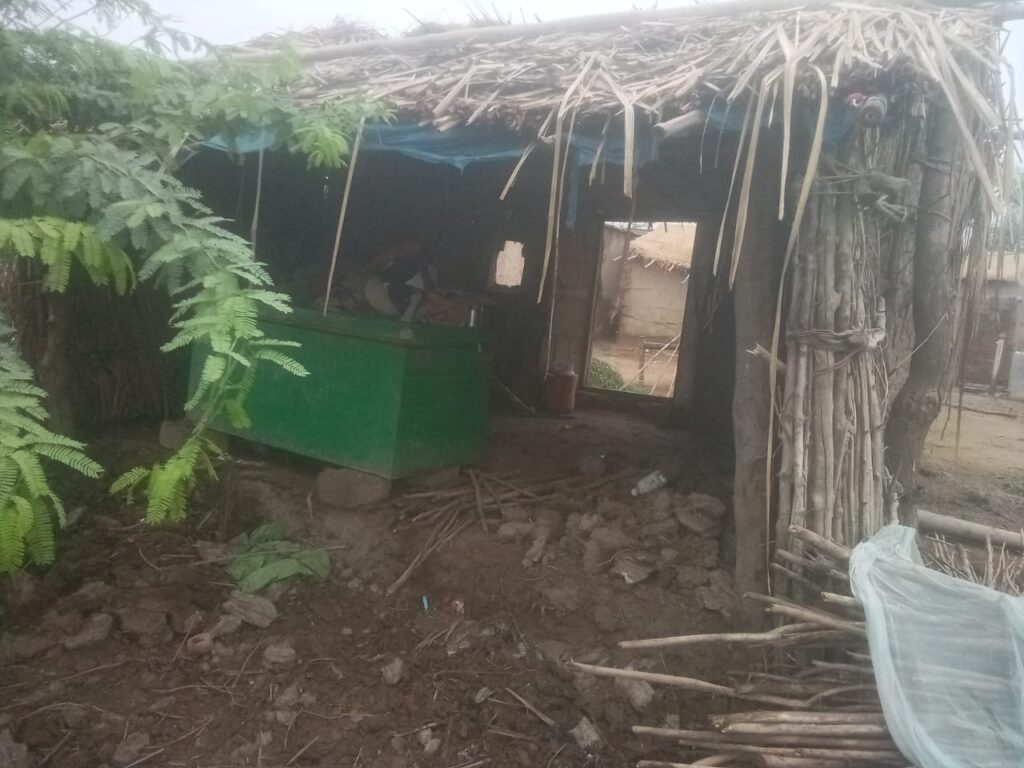
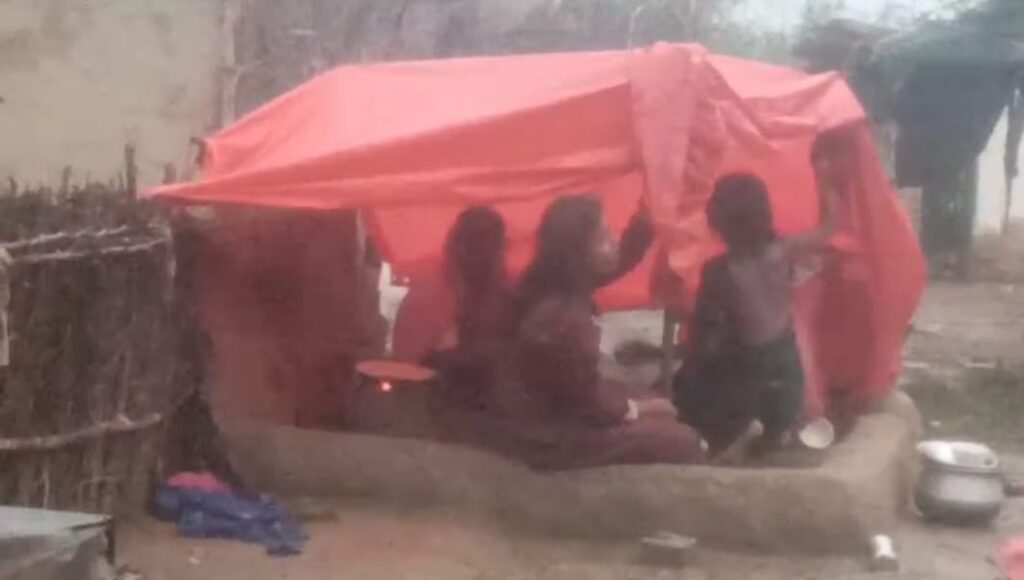
Families have lost their mud homes and are now surviving in makeshift tents with little food.
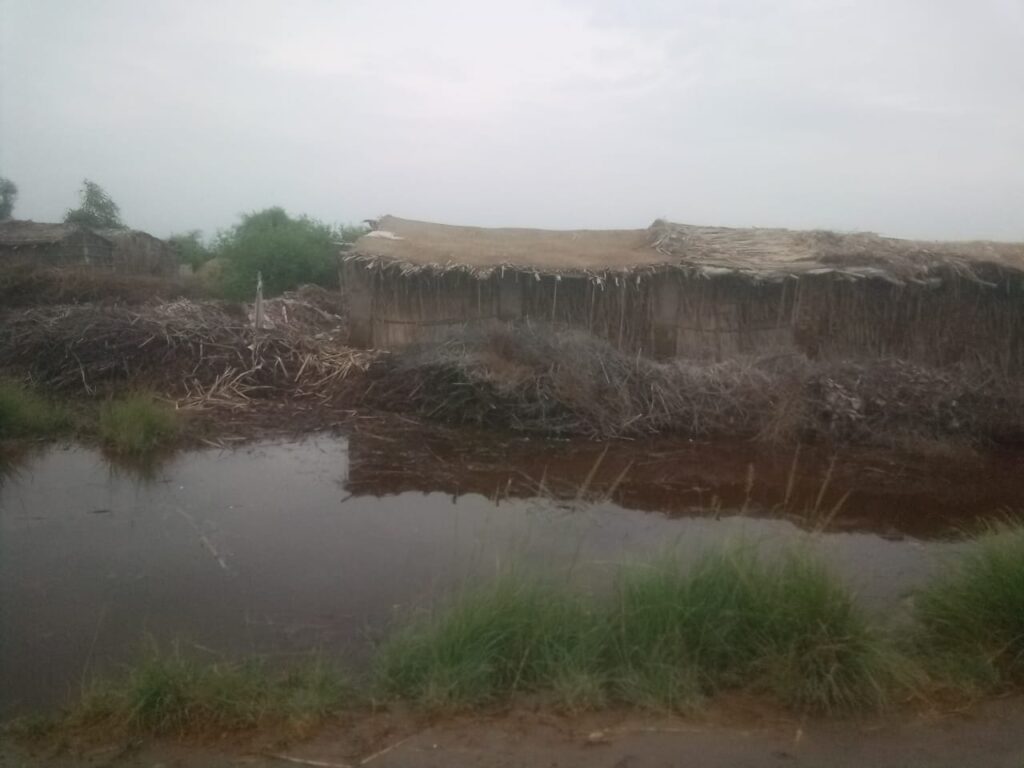
With fields flooded, daily-wage workers have no income and face hunger, disease, and despair.
On 19th August 2025, a powerful spell of monsoon rain struck Sindh province, with parts of Karachi recording 145mm of rainfall in a single day. Tragically, nine lives were lost to collapsing walls and electrocution. The National Disaster Management Authority (NDMA) has already warned of further heavy rains in the coming days, raising fears of urban flooding and widespread devastation.
While cities struggle, it is the rural poor who are suffering the most.
A Village Devastated
The village of Ali Ahmad Khan Mari, on the outskirts of Tando Adam in Sanghar District, is home to more than 60 Christian and Hindu families. Most survive by working on the farms of local landlords, earning barely enough to support their large households—often six or seven members each. At times, even children must labour in the fields just to keep their families fed.
Their homes, built from mud on land provided by Muslim landlords, are fragile and collapse easily under the pressure of monsoon rains. Every year, these families face the same disaster: walls cracking, roofs collapsing, and lives thrown into turmoil.
Families Left Homeless
On 21st August, BACA volunteer Evangelist Daniyal reported that the latest rains had devastated the Christian community in Ali Ahmad Khan Mari.
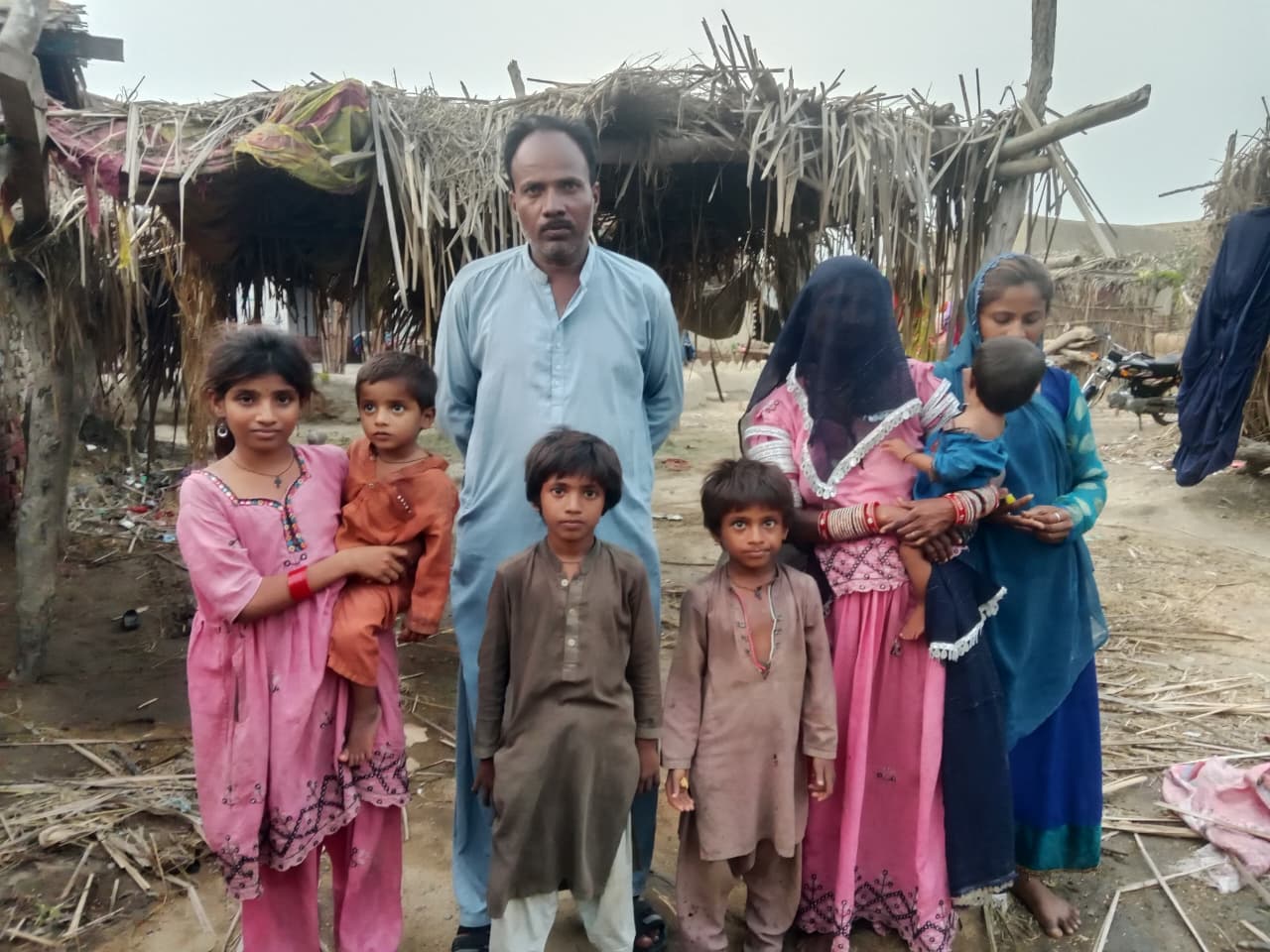
On 19th August, heavy clouds gathered before torrential rain poured down for nearly four hours. Several homes collapsed, including those of Lalo Masih and Ravi Masih. Both families were forced to take shelter in makeshift tents while the rain continued to fall.
“The affected families are still living in makeshift tents,” said Daniyal. “We moved our belongings into a nearby school to avoid further loss,” explained Lalo Masih.
The next day, the rains returned—deepening the misery of families already left with nothing.
Ravi Masih and his family stand outside their collapsed home, now forced to live in a temporary shelter after heavy rains
Hunger and Disease Loom
The disaster has left families without homes and without income. With fields waterlogged and farming suspended, daily-wage earners have no means of survival.
As Daniyal shared:
“No work means no money to buy food and groceries for their families.”
Now, the community faces:
Severe food shortages
Waterborne diseases caused by stagnant floodwater
A surge in mosquito-borne illnesses such as malaria and dengue
If NDMA’s warnings of further heavy rains prove true, this already fragile community will be driven deeper into crisis.
Juliet Chowdhry, Trustee of BACA, said:
“Once again, Christian families in rural Sindh are bearing the brunt of devastating monsoon rains. These families were already struggling to survive on meagre daily wages, and now they have lost their homes, their income, and their dignity. With your support, we can provide food, shelter, and medical aid to ensure they are not abandoned in their hour of greatest need.”
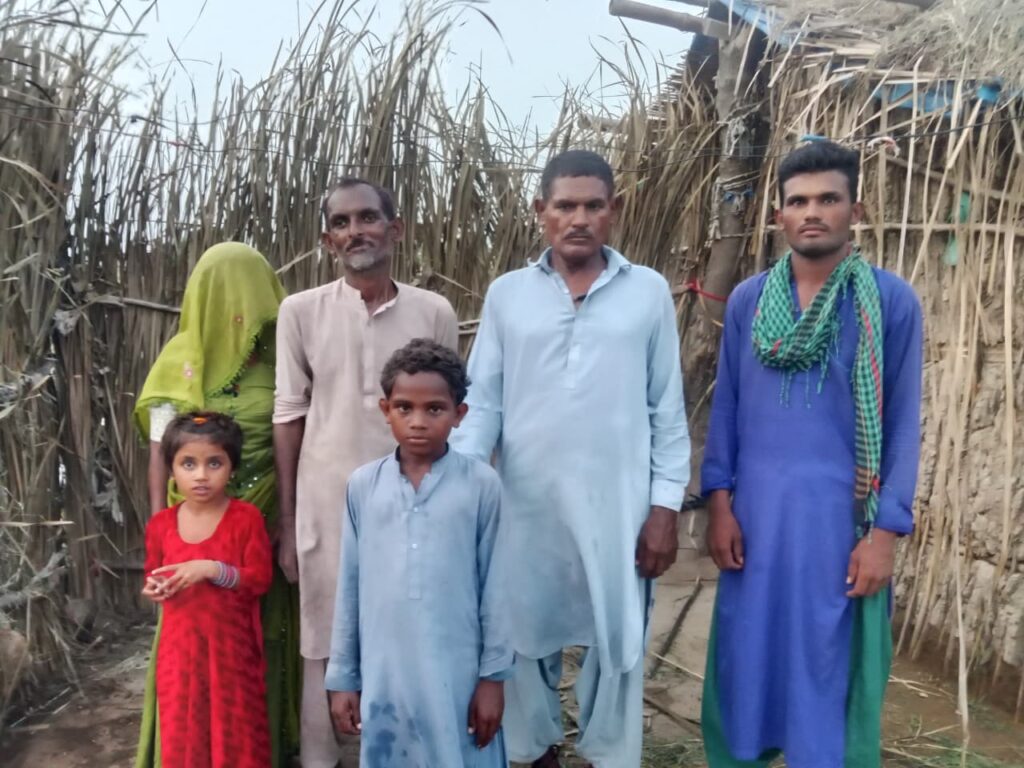
Families in Ali Ahmad Khan Mari are living in makeshift tents after their homes collapsed in heavy monsoon rains
Juliet Chowdhry, Trustee of BACA, said:
“Once again, Christian families in rural Sindh are bearing the brunt of devastating monsoon rains. These families were already struggling to survive on meagre daily wages, and now they have lost their homes, their income, and their dignity. With your support, we can provide food, shelter, and medical aid to ensure they are not abandoned in their hour of greatest need.”





 Click Here to Donate Now