



A remarkable photograph taken by a British doctor approaching Islamabad Airport prompted an internet search that uncovered reports of an ancient giant marble cross in Pakistan’s northern mountains — opening a fascinating investigation into the country’s early Christian history, the traditions of St Thomas and the enduring faith of Christians across South Asia.
British Asian Christian Association (BACA) | October 2026
A Remarkable Sight During a Flight to Islamabad
On 6 October 2026, the British Asian Christian Association (BACA) received an intriguing message from a British doctor, a regular donor and longstanding friend of the charity, who had recently travelled to Pakistan to deliver a keynote address at a conference.
During his flight into Islamabad International Airport, the doctor had witnessed something extraordinary.
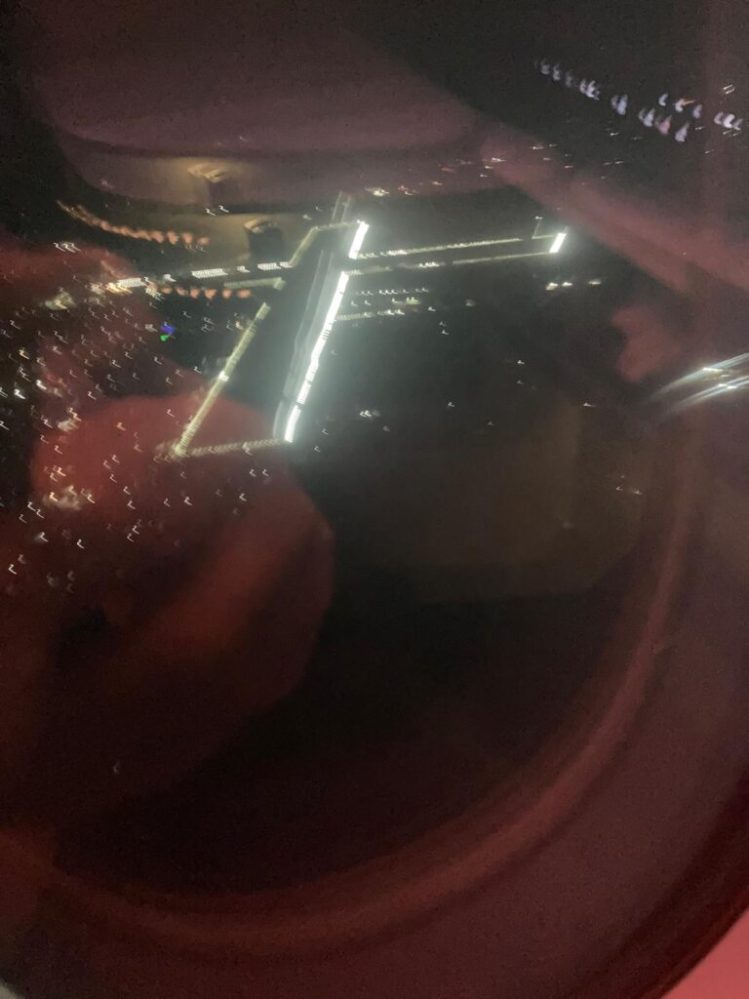
Looking through the aircraft window as his plane descended towards the capital, he noticed what appeared to be an enormous, brilliantly illuminated white cross stretching across the dark landscape below.
The formation was so striking that he photographed it, later sharing the image with BACA.
From the air, the glowing structure appeared remarkably similar to a gigantic Christian cross, raising questions about whether it might have been deliberately constructed as a symbol of faith.
The doctor recalled seeing the formation a couple of miles before the aircraft reached the airport.
He was uncertain what had created the remarkable image, suggesting that it might have been caused by buildings, factories or road lighting.
However, the sight left him deeply moved.
‘The Light of Christ Is Not Extinguished’
In his recorded message to BACA, the doctor expressed his admiration for the organisation’s work supporting persecuted Christians in Pakistan.
He said:
“I greatly admire the UK Pakistani Christian Association and all of the great work they do. They remind me of the Thessalonians helping the poor church in Jerusalem 2,000 years ago.”
Recalling the extraordinary sight during his first business trip to Pakistan, he explained:
“When the plane was flying into Islamabad, I saw this amazing large white cross on the ground.”
Although he did not know what had caused the formation, he interpreted the experience through his Christian faith.
“I took it as providence that the light of Christ is not extinguished, never will be.”
He continued by quoting the words of Jesus Christ:
“Heaven and earth will pass away, but my words will never pass away.” — Matthew 24:35
The doctor explained that the experience strengthened his desire to support the charitable work carried out by the Chowdhry family for Pakistani Christians.
For BACA, the image was both fascinating and mysterious.
But was it really a gigantic Christian cross?
Solving the Mystery of the Illuminated Cross
BACA began investigating the photograph to establish whether the structure had any religious significance.
It soon became apparent that the illuminated formation was not a Christian monument.
The most likely explanation was that the apparent cross had been created by the arrangement of airport lighting infrastructure, including runway or approach lights, viewed from an aircraft at night.
Such lighting systems use carefully positioned rows of powerful lights to guide aircraft safely towards landing areas. When seen from above, intersecting lines can create striking cross-shaped patterns.
Reflections and glare through the aircraft window may also have enhanced the brightness and unusual appearance of the formation.
Although the precise installation has not been independently identified, the available evidence suggested that the cross-like appearance was accidental rather than a deliberate religious statement.
However, the search to uncover its origins led BACA towards something considerably more historically significant.
During an internet search investigating the illuminated cross, BACA discovered a previously published article about a gigantic ancient marble cross found in Pakistan’s Karakoram mountains.
This unexpected discovery transformed a simple photographic mystery into an exploration of Christianity’s ancient presence in the region.
An Ancient Giant Cross in Pakistan’s Northern Mountains
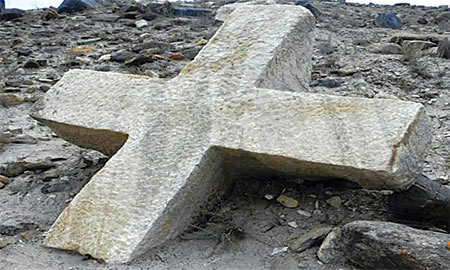
The article uncovered during BACA’s internet research described an extraordinary archaeological discovery made public in 2020 in the village of Kavardo, near Skardu, in Gilgit-Baltistan.
Researchers had reported the discovery of an enormous marble cross, measuring approximately 2.1 metres by 1.8 metres and weighing between three and four tonnes.
Some researchers suggested that the carving could be approximately 1,200 years old, potentially placing its origins around the eighth or ninth century AD.
The discovery attracted attention because of its possible connection with the early spread of Christianity through the ancient trading routes linking Persia, Central Asia, China and the Indian subcontinent.
The Karakoram region lies close to routes historically associated with the Silk Road, along which merchants, travellers and religious teachers carried ideas and beliefs between distant civilisations.
Christian communities associated with the Church of the East are known to have existed across parts of Asia during the first millennium.
Some scholars have therefore suggested that the Kavardo carving might be evidence of early Christian activity in what is now northern Pakistan.
However, its origins remain disputed.
While some researchers have proposed that it is an ancient Christian cross, others have questioned whether the carving may instead represent a pre-Christian symbol or architectural stonework.
A research team associated with the University of Baltistan began investigating the discovery.
Professor Muhammad Naeem Khan, then vice-chancellor of the university, acknowledged the uncertainty surrounding the object:
“This needs carbon dating and exact scientific evidence, but there’s a lot of excitement and a lot of division.”
Researcher Wajid Bhatti described the discovery as potentially one of the largest ancient crosses found on the Indian subcontinent.
He suggested that, if confirmed as Christian, it could indicate that Christian communities once lived in an area where their historical presence has largely disappeared from public memory.
The discovery raises fascinating questions.
Who carved such a large stone symbol? Was it connected with an ancient Christian settlement? Could it have been created by Christians travelling along the Silk Road?
Until further archaeological research establishes its age and purpose, these questions remain unanswered.
Nevertheless, the discovery highlights how much of Pakistan’s ancient religious history may still await investigation.
Did St Thomas Bring Christianity to Ancient Pakistan?
The Kavardo discovery also led BACA to consider a much older Christian tradition — the belief that St Thomas, one of the twelve apostles of Jesus Christ, travelled to parts of the Indian subcontinent during the first century AD.
St Thomas is traditionally associated with the establishment of Christianity in Kerala, southern India, where his arrival is commonly dated to AD 52.
However, early Christian traditions also connect the apostle with the ancient city of Taxila, situated near present-day Islamabad.
Taxila was an important centre of trade, scholarship and cultural exchange, connecting South Asia with Persia and Central Asia.
The third-century Christian text The Acts of Thomas recounts the apostle’s encounter with an Indo-Parthian ruler named Gondophares.
According to the account, the king commissioned Thomas to build a magnificent royal palace.
Instead, Thomas distributed the money among the poor.
When the king discovered this, he threatened to punish the apostle.
The story continues that the king’s brother experienced a vision of a magnificent heavenly palace constructed through Thomas’s charitable acts, ultimately leading to the ruler’s conversion to Christianity.
Although the miraculous account cannot be independently verified, King Gondophares was a genuine historical ruler, known through ancient coins and other evidence.
This historical connection has encouraged generations of researchers and Christians to investigate whether the apostle may have visited the region.
The Palace of St Thomas at Sirkap
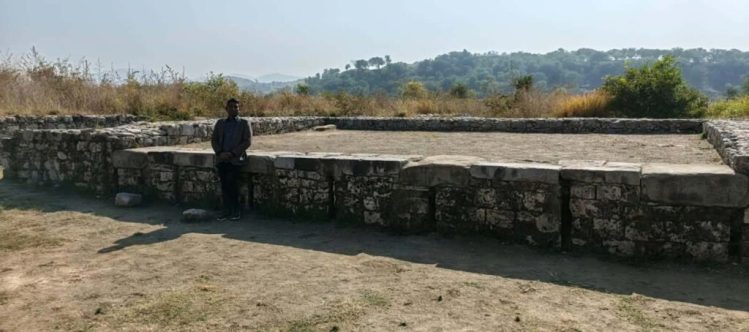
Within the ancient archaeological landscape of Sirkap, one of Taxila’s historic settlements, local Christian heritage traditions identify an area associated with the so-called Palace or Throne of St Thomas.
The association reflects the story preserved in The Acts of Thomas.
However, no archaeological discovery has conclusively established that Thomas personally visited the city or that a particular excavated building was the palace described in the ancient Christian text.
Nevertheless, the tradition is an important reminder that the history of Christianity in South Asia cannot be reduced to the arrival of European missionaries centuries later.
The region’s connections with early Christianity may be considerably older.
St Thomas and the Ancient City of Taxila: A Remarkable Historical Connection
The possibility that Christianity reached present-day Pakistan during the earliest years of the faith is supported by longstanding traditions surrounding St Thomas, one of the twelve apostles of Jesus Christ.
According to early Christian accounts, St Thomas travelled east during the first century AD, with traditions linking his missionary journeys to the ancient city of Taxila, near modern-day Islamabad.
The third-century Christian text The Acts of Thomas describes the apostle’s encounter with King Gondophares, an Indo-Parthian ruler who commissioned him to construct a magnificent palace. Instead, Thomas distributed the money among the poor, explaining that he had built the king a palace in heaven. The account describes the king’s eventual conversion following a miraculous vision experienced by his brother.
Although the story’s religious elements cannot be independently verified, Gondophares was a genuine historical ruler whose existence is confirmed by archaeological evidence, including ancient coins.
UNESCO Heritage Signage Acknowledges the Tradition of St Thomas
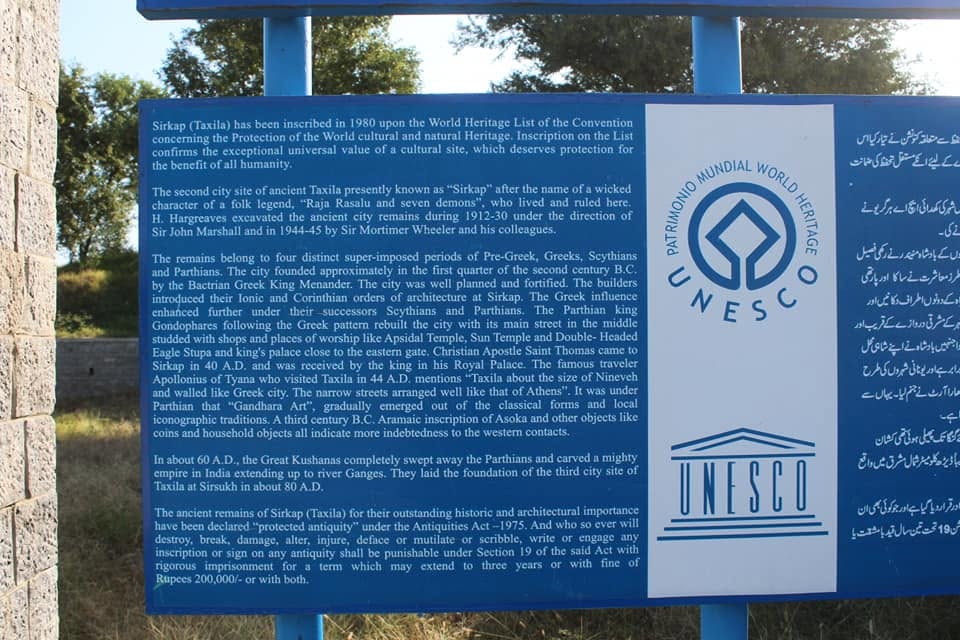
Particularly fascinating is an official heritage information board at Sirkap, one of the ancient cities of Taxila and part of the UNESCO World Heritage Site.
The sign, which explains the history of the ancient settlement and its successive Greek, Scythian and Parthian rulers, specifically refers to the Christian Apostle St Thomas.
The information board states:
“Christian Apostle Saint Thomas came to Sirkap in 40 A.D. and was received by the king in his Royal Palace. The famous traveler Apollonius of Tyana who visited Taxila in 44 A.D. mentions ‘Taxila about the size of Nineveh and walled like Greek City. The narrow streets arranged well like that of Athens’.”
The reference is particularly noteworthy because it demonstrates that the tradition of St Thomas visiting Taxila has been incorporated into the historical interpretation presented to visitors at this internationally recognised archaeological site.
The sign also identifies Gondophares as a Parthian ruler associated with the rebuilding of Sirkap, providing a historical setting for the traditions recorded in The Acts of Thomas.
While the statement on the heritage board should not be mistaken for conclusive archaeological proof that St Thomas visited Taxila in AD 40, its inclusion is significant. It shows that the apostle’s association with the ancient city is sufficiently prominent in local historical traditions to feature in public heritage interpretation.
For Pakistani Christians, this connection is especially meaningful. It challenges the widespread assumption that Christianity arrived in the region only through European colonial activity and highlights traditions suggesting that the faith may have reached the lands of present-day Pakistan during Christianity’s earliest generations.
The Taxila Cross: Another Intriguing Historical Discovery
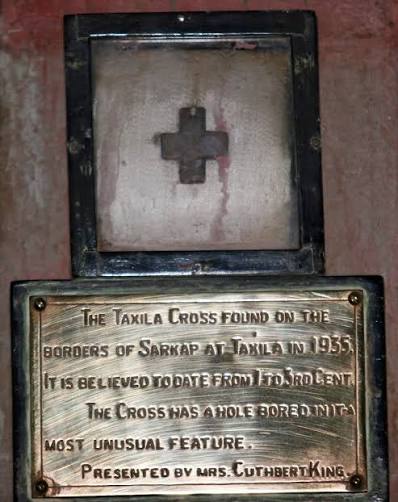
Another artefact frequently discussed in connection with Pakistan’s early Christian history is the Taxila Cross.
The cross-shaped stone, reportedly discovered in 1935 and subsequently preserved at the Cathedral Church of the Resurrection in Lahore, has become an important symbol of the historical identity of Pakistani Christians.
Some researchers and Christian writers have associated the object with early Christian activity in the Taxila region.
However, its precise age, original function and archaeological interpretation remain subjects of debate.
It cannot by itself prove that St Thomas preached in Taxila, but it is a valuable object for further research into the region’s religious history.
Together, the Taxila Cross, the traditions surrounding St Thomas and the giant marble carving at Kavardo illustrate why Pakistan’s ancient Christian connections deserve more sustained academic attention.
Hannah Chowdhry Explores Taxila’s Ancient History
BACA’s interest in the Christian heritage of Taxila also has a personal connection.
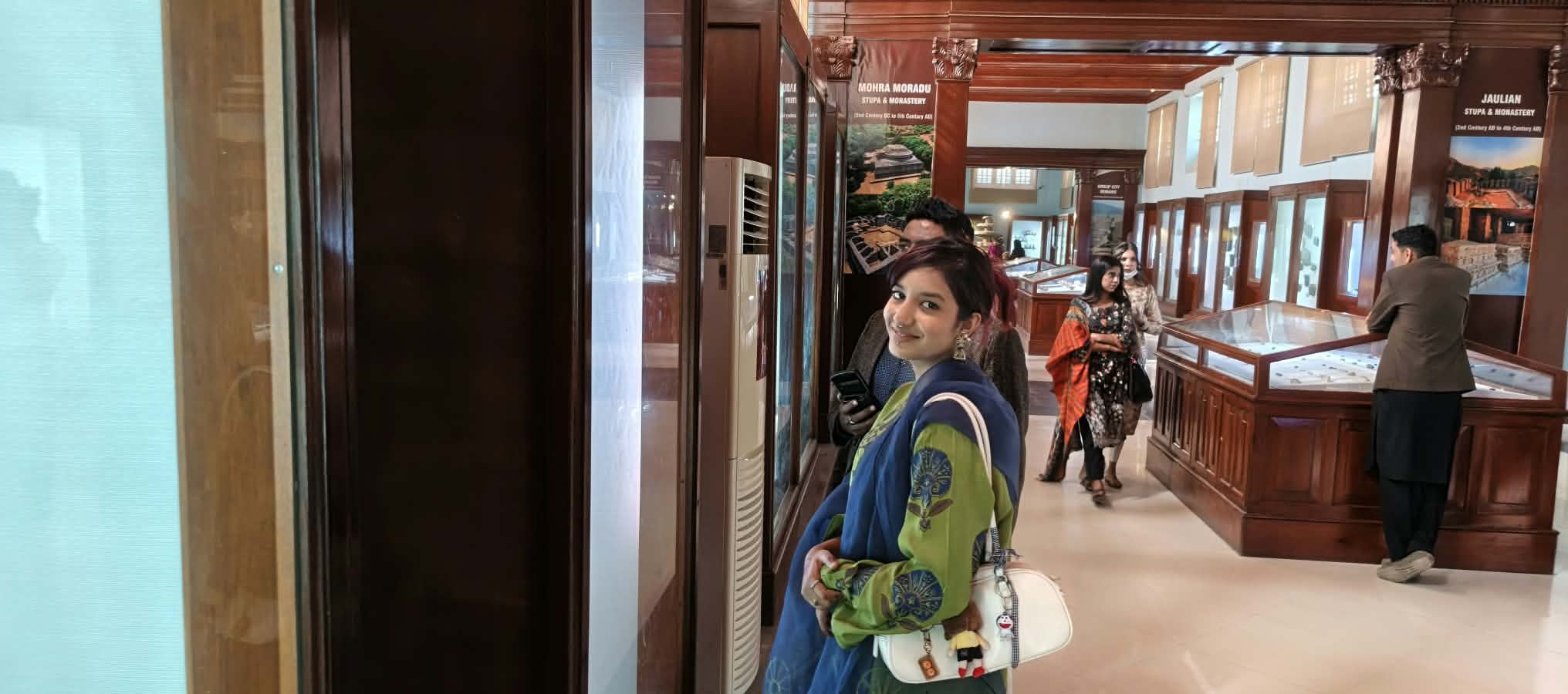
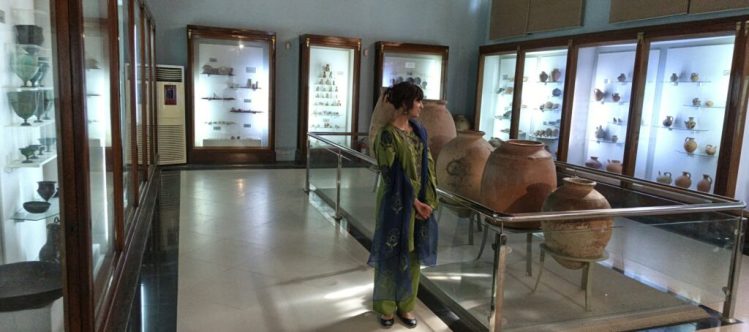
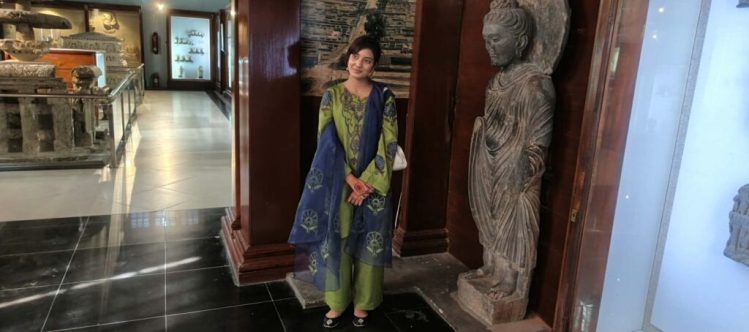
On 9 November 2025, almost eleven months before the doctor’s message about the illuminated cross arrived, Hanna Chowdhry visited Taxila Museum during a trip to Pakistan.
Her visit was part of an opportunity to explore the remarkable historical and archaeological heritage of the region.
Taxila Museum stands amid an extensive landscape of ancient settlements, Buddhist monasteries and archaeological remains.
Its collections include Gandharan sculptures, religious artefacts, coins, jewellery and objects recovered from important archaeological sites throughout the Taxila Valley.
These include the ancient settlements of Bhir Mound, Sirkap and Sirsukh, as well as Buddhist monastic complexes and stupas at Dharmarajika, Mohra Moradu, Jaulian, Kalawan, Bhamala and other locations.
The region’s history reflects centuries of interaction between Greek, Persian, Buddhist and South Asian cultures.
For BACA, Hanna’s earlier visit provides an interesting connection to the historical questions raised by the subsequent discovery of the article about the Kavardo Cross.
Although her visit took place independently of the doctor’s photograph, it demonstrates BACA’s continuing interest in Pakistan’s historical and cultural heritage.
Hannah Chowdhry, said:
“When I visited Taxila Museum in November 2025, I was struck by the extraordinary history of the region and how many different civilisations and religious traditions had left their mark there.
“It is fascinating to think that places such as Taxila may also have connections with the earliest spread of Christianity into South Asia.
“When we later learned about the ancient marble cross discovered in northern Pakistan, it reminded me how much of our Christian heritage may still be waiting to be properly researched and understood.
“For Pakistani Christians, especially younger generations, this history matters. It helps us understand that Christianity has deep roots in the wider region and that our community’s identity is part of a much larger historical story.
“Despite the discrimination and persecution that Christians continue to face, we should never forget the remarkable endurance of our faith and the contribution Christians have made to the countries they call home.”
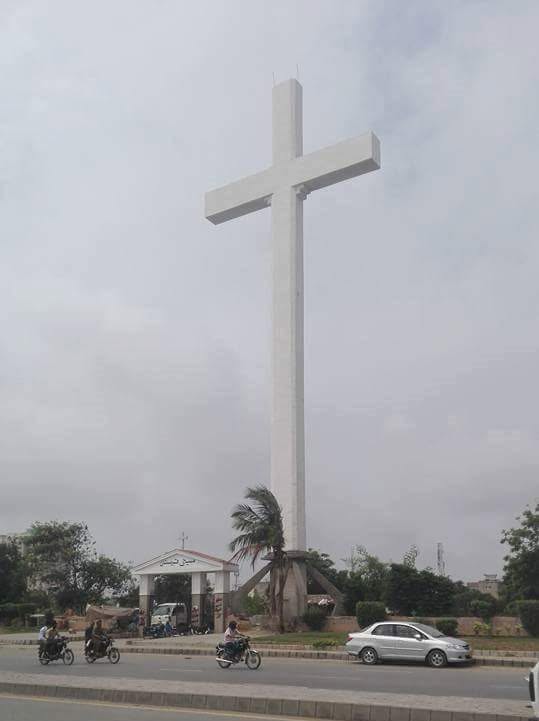
Karachi’s 140-Foot Cross: A Modern Symbol of Christian Resilience
Pakistan’s Christian heritage is not limited to ancient traditions and archaeological discoveries.
BACA has previously reported on the enormous 140-foot Christian cross erected in Karachi, commonly known as the Cross of Hope.
The monument has been widely described as Asia’s largest Christian cross and has become an important public symbol of Christianity in Pakistan.
Unlike the illuminated formation photographed near Islamabad Airport, Karachi’s cross was deliberately constructed as an expression of Christian faith, by a local businessman.
For many Pakistani Christians, it represents perseverance in a country where members of the community continue to experience religious discrimination, intimidation, violence and attacks upon places of worship.
The monument demonstrates that Christianity remains a visible and living part of Pakistan’s religious landscape.
Kerala and Christianity’s Ancient Roots in South Asia
The wider history of Christianity in the Indian subcontinent provides additional context.
In Kerala, southern India, the St Thomas Christian communities trace their origins to the apostle’s traditional arrival in AD 52.
The region is associated with some of the world’s oldest surviving Christian traditions, with historic churches and communities maintaining links to Syriac Christianity for many centuries.
The traditional seven-and-a-half churches attributed to St Thomas remain central to the community’s religious identity.
Although the exact first-century origins of these churches cannot all be verified archaeologically, the antiquity of Christianity in Kerala is well established.
These communities existed long before European colonial expansion into South Asia.
Their history challenges the assumption that Christianity in the region began with Portuguese or British missionaries.
From Kerala to Taxila, and potentially through the ancient trade routes of the Karakoram, Christianity’s history in South Asia stretches back many centuries and, according to longstanding traditions, to the apostolic age itself.
The Light of Christianity Has Not Been Extinguished
What began with a remarkable photograph sent to BACA on 6 October 2026 developed into an unexpected journey through Pakistan’s Christian heritage.
The doctor had seen what appeared to be a gigantic illuminated cross during his approach to Islamabad.
An investigation suggested that the formation was simply airport lighting, creating an extraordinary visual effect when viewed from above.
Yet the internet search undertaken to explain that image led BACA to a published account of a genuine ancient cross-shaped marble carving in the mountains of northern Pakistan.
That discovery opened the door to wider questions about the spread of Christianity along the Silk Road, the traditions surrounding St Thomas in Taxila and the ancient Christian communities of the Indian subcontinent.
It also brought renewed significance to Hannah Chowdhry’s earlier visit to Taxila Museum in November 2025.
For the British Asian Christian Association, these connections offer a powerful reminder that Christianity has a long and complex history in South Asia.
The exact origins of some archaeological discoveries remain uncertain, and more research is required before definitive conclusions can be drawn.
But the historical endurance of Christianity across the subcontinent is undeniable.
Today, Pakistani Christians continue to face serious challenges, including discrimination, poverty, violence and religious persecution.
BACA believes that preserving and researching the region’s Christian heritage is an important part of ensuring that future generations understand their place within Pakistan’s history.
Christian communities should not be regarded as outsiders in the lands where they have lived for generations.
They are part of the religious, cultural and social fabric of South Asia.
The British doctor who photographed the extraordinary lights near Islamabad Airport may not have discovered a new Christian monument, but his experience led BACA towards an important and largely overlooked chapter of history.
His words remain particularly poignant:
“I took it as providence that the light of Christ is not extinguished, never will be.”
For Christians across Pakistan and the wider South Asian subcontinent, the message is one of hope: despite centuries of change, hardship and persecution, their faith, heritage and communities continue to endure.
The British Asian Christian Association (BACA) supports persecuted Christians and other vulnerable minorities, campaigns for religious freedom and works to raise awareness of discrimination and human rights abuses in Pakistan and beyond. You can help us fulfill our calling by [donating here].